
When I started blogging, ten whole years ago, people were already saying that blogging was dead. They were right. Certainly the blogs on which I formed my idea of blogging were all in various stages of slowing down and winding up. By late 2012, they were all gone – by which I mean that the authors had moved on to other things. Better things, for the most part.
I’ve always enjoyed blogging, although less so lately. Fearing that I might enjoy it a little too much at first, I set myself a very tight schedule of forty-seven posts per year, so as not to start to strong and peter out just as quickly. This one is post number 469. I have something prepared for next week, which will make the round figure of 470 posts in ten years. Then we’ll see what happens. I’ll only continue if I can make the process enjoyable again. I don’t see how I could keep anyone else interested otherwise.
I started thinking I would be writing mostly for my own sake, but that’s never what happens. Writing finds readers, always, and it’s the readers – even if they number in the dozens – who decide where the writing goes. It’s a social exchange, and it didn’t stop being one even after I closed the comments, which the platform could no longer handle without letting through a torrent of daily spam (they since fixed that).
Every year on the blog’s anniversary I post pictures of some of the second-hand books I have acquired in the previous twelve months, a tradition largely centred around the marvellous Downtown Community Centre Book Fair – an institution whose own future is in doubt. The other yearly tradition is the changing of the banner, with new ones produced by Shirley Carran,


Tim Denee,

Dylan Horrocks,

Sarah Laing,


Marian Maguire

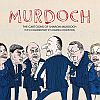
and finally Sharon Murdoch.

This year I’ve restored the original artwork by Bert Warter for Bruno Furst’s 1949 books Stop Forgetting, which is where the name of the blog comes from.
One of the things that has made it harder to keep to my schedule this year has been more writing done elsewhere. As well as the usual output for Overland, I’ve written several pieces for the new online magazine Popula, as well as The New Humanist, Landfall Online and the new issue of Sport. I also sat on the jury for the non-fiction section of the Fair Australia Prize, which was a joy. There is no shortage of people doing amazing writing out there which is certainly something that makes blogging seem a bit silly sometimes.
Anyway: here’s the usual brief cavalcade into some of the old books I got and their pretty covers. It begins with a very lavish catalogue of The Queen’s Empire, produced in 1897 by Cassell and Company and sent to every corner of the same. Books like these is how people knew what the world looked like.

The London Illustrated News (of which I already had some collected volumes) was serving this function as late as 1953, and put out this memento of the current Queen’s coronation.

A couple of favourite pictures from within. The Dean of Westminster.

And a colourful portrait of Elizabeth and Charles.

In something of a contrast, thanks to the intercession of a good friend I inherited a box of books about the Soviet Union. Far too many to catalogue here, but here’s a little sampler.


The same friend sent me children’s book about professions, one of my favourite genres.


In 1927, Helen Ryder received the collected poems of Robert Browning (whose name is interestingly abbreviated on the cover, engraved on leather) by the Hutt Valley High School as a memento of her time at the school.


I’m always on the lookout for old histories of New Zealand. I like the front cover of AH Reed’s,

but also his lively author picture at the back.

The find of the year were probably the two volumes of the 1979 Historic Buildings of New Zealand.


In Italy I found the only book I had never read of my beloved humourist Achille Campanile. Tragically, it’s both unfunny and quite racist. I guess there’s a reason why nobody ever bothered to reprint it after 1934.

This little book about George Grosz did not disappoint.

While I have not yet attacked John A. Lee’s political testament

nor these very intriguing little collections of New New Zealand Writing published during the second world war.


Of the execrable The Shadow by Lionel Terry – the killer of Zhou Kum Yung in Haining Street in 1905 – I was mostly interested in the General Assembly Library sticker, and the stamp that declared it withdrawn. There is a whole lot of history in that holding, also in the context of the country’s racist laws targeting Chinese immigration.

Whereas of the cartoons by Gordon Minhinnick collected in Min’s Pie I can mostly say that I don’t get them, but the artwork is lovely.

See if you can work out what this one is about. The date of publication is 13 September 1950.

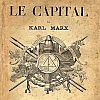
Finally, I can never resist a classic with a pretty cover.

C’est tout.
I’ve always enjoyed blogging, although less so lately. Fearing that I might enjoy it a little too much at first, I set myself a very tight schedule of forty-seven posts per year, so as not to start to strong and peter out just as quickly. This one is post number 469. I have something prepared for next week, which will make the round figure of 470 posts in ten years. Then we’ll see what happens. I’ll only continue if I can make the process enjoyable again. I don’t see how I could keep anyone else interested otherwise.
I started thinking I would be writing mostly for my own sake, but that’s never what happens. Writing finds readers, always, and it’s the readers – even if they number in the dozens – who decide where the writing goes. It’s a social exchange, and it didn’t stop being one even after I closed the comments, which the platform could no longer handle without letting through a torrent of daily spam (they since fixed that).
Every year on the blog’s anniversary I post pictures of some of the second-hand books I have acquired in the previous twelve months, a tradition largely centred around the marvellous Downtown Community Centre Book Fair – an institution whose own future is in doubt. The other yearly tradition is the changing of the banner, with new ones produced by Shirley Carran,
Tim Denee,
Dylan Horrocks,
Sarah Laing,
Marian Maguire
and finally Sharon Murdoch.
This year I’ve restored the original artwork by Bert Warter for Bruno Furst’s 1949 books Stop Forgetting, which is where the name of the blog comes from.
One of the things that has made it harder to keep to my schedule this year has been more writing done elsewhere. As well as the usual output for Overland, I’ve written several pieces for the new online magazine Popula, as well as The New Humanist, Landfall Online and the new issue of Sport. I also sat on the jury for the non-fiction section of the Fair Australia Prize, which was a joy. There is no shortage of people doing amazing writing out there which is certainly something that makes blogging seem a bit silly sometimes.
Anyway: here’s the usual brief cavalcade into some of the old books I got and their pretty covers. It begins with a very lavish catalogue of The Queen’s Empire, produced in 1897 by Cassell and Company and sent to every corner of the same. Books like these is how people knew what the world looked like.
The London Illustrated News (of which I already had some collected volumes) was serving this function as late as 1953, and put out this memento of the current Queen’s coronation.
A couple of favourite pictures from within. The Dean of Westminster.
And a colourful portrait of Elizabeth and Charles.
In something of a contrast, thanks to the intercession of a good friend I inherited a box of books about the Soviet Union. Far too many to catalogue here, but here’s a little sampler.
The same friend sent me children’s book about professions, one of my favourite genres.
In 1927, Helen Ryder received the collected poems of Robert Browning (whose name is interestingly abbreviated on the cover, engraved on leather) by the Hutt Valley High School as a memento of her time at the school.

I’m always on the lookout for old histories of New Zealand. I like the front cover of AH Reed’s,
but also his lively author picture at the back.
The find of the year were probably the two volumes of the 1979 Historic Buildings of New Zealand.
In Italy I found the only book I had never read of my beloved humourist Achille Campanile. Tragically, it’s both unfunny and quite racist. I guess there’s a reason why nobody ever bothered to reprint it after 1934.
This little book about George Grosz did not disappoint.
While I have not yet attacked John A. Lee’s political testament
nor these very intriguing little collections of New New Zealand Writing published during the second world war.
Of the execrable The Shadow by Lionel Terry – the killer of Zhou Kum Yung in Haining Street in 1905 – I was mostly interested in the General Assembly Library sticker, and the stamp that declared it withdrawn. There is a whole lot of history in that holding, also in the context of the country’s racist laws targeting Chinese immigration.
Whereas of the cartoons by Gordon Minhinnick collected in Min’s Pie I can mostly say that I don’t get them, but the artwork is lovely.
See if you can work out what this one is about. The date of publication is 13 September 1950.
Finally, I can never resist a classic with a pretty cover.
C’est tout.

















 Posts


